7
ENGLISH
3.9 Draining the heating system
Before starting to drain the system, switch off the electrical supply by turning
off the main switch of the system.
Close the shut-off devices on the heating system.
Manually loosen the system drain valve (D).
3.10 Draining the domestic hot water system
When there is risk of frost, the domestic hot water system must be emptied
in the following way:
- close the main tap of the water mains
- open all the hot and cold water taps
- drain the lowest points.
3.11 Bleeding the air from the heating circuit and boiler
During the initial installation phase, or in the event of extraordinary
maintenance, you are advised to perform the following sequence of
operations:
1. Open the automatic air vent by turning the plug on the lower valve (A,
g. 18) two or three turns, to bleed the air continuously, leave valve plug
A open.
2. Open the system lling tap located on the hydraulic unit and wait until
water begins to drain out of the valve.
3. Switch on the electricity supply to the boiler, leaving the gas tap turned off.
4. Activate a heat request via the room thermostat or the remote control
panel, so that the 3-way valve goes into heating mode.
5. Activate a DHW request as follows:
open a tap, for 30 seconds every minute so that the three-way valve
switches from heating to domestic hot water and vice versa about ten
times. In this situation, the boiler will go into alarm mode due to the
absence of gas, so it must be reset every time this happens.
6. Carry on with the sequence until only water leaks out of the manual air vent
valve, and the air ow has stopped. Close the manual air vent valve.
7. Check the system pressure level is correct (the ideal level is 1 bar).
8. Turn off the system lling tap.
9. Turn on the gas tap and ignite the boiler.
3.12 Flue gas discharge and air suction
Observe local legislation regarding ue gas discharge.
Flue gases are discharged
from a centrifugal fan located inside the combustion
chamber and the control board constantly checks that this is working correctly.
The boiler is supplied without the ue gas discharge/air suction kit, since it is
possible to use the accessories for appliance with a forced draught sealed
chamber that better adapts to the installation characteristics. For ue gas
extraction and the restoration of boiler combustion air, it is essential to only
use certied piping. Connection must be carried out correctly as indicated in
the instructions supplied as standard with the ue gas
accessories.
Multiple appliances can be connected to a single smoke pipe provided that
each is a sealed chamber-type appliance. The boiler is a Type C appliance
(sealed chamber), and must therefore have a safe connection to the ue
gas discharge pipe and to the combustion air suction pipe; these both carry
their contents outside, and are essential for the operation of the appliance.
b
The maximum lengths of the ducts refer to ue systems available in
the catalogue.
b
The straight length measurement is inclusive of the rst bend (boiler
connection), terminals and joints; with the exception of the vertical
coaxial duct Ø 60-100 mm, where the straight length does not include
the bends.
POSSIBLE OUTLET CONFIGURATIONS (g. 23)
B23P/B53P
Suction indoors and discharge outdoors
C13-C13x Discharge via concentric wall outlet. The pipes may leave the
boiler independently, but the outlets must be concentric or sufciently close
together to be subjected to similar wind conditions (within 50 cm)
C33-C33x Discharge via concentric roof outlet. Outlets as for C13
C43-C43x Discharge and suction in common separate smoke pipes, but
subjected to similar wind conditions
C53-C53x Separate discharge and suction lines on wall or roof and in areas
with different pressures. The discharge and suction lines must never be
positioned on opposite walls
C63-C63x Discharge and suction lines using pipes marketed and certied
separately (1856/1)
C83-C83x Discharge via single or common smoke pipe and wall suction line
C93-C93x Discharge on roof (similar to C33) and air suction from a single
existing smoke pipe
“FORCED OPEN” INSTALLATION (TYPE B23P/B53P)
Flue gas discharge pipe ø 80 mm (g. 20)
The ue gas discharge pipe can be directed to the most suitable direction
according to installation requirements. For installation, follow the instructions
supplied with the kit. In this conguration, the boiler is connected to the ue
gas discharge pipe (ø 80 mm) through an adaptor (ø 60-80 mm).
b
In this case, the combustion air is picked up from the boiler installation
room (which must be a suitable technical room with proper ventilation).
b
Uninsulated ue discharge outlet pipes are potential sources of
danger.
b
Arrange the ue gas discharge pipe so it slopes by 3° towards the boiler.
b
The boiler automatically adapts the purging to the type of installation
and the length of the pipe.
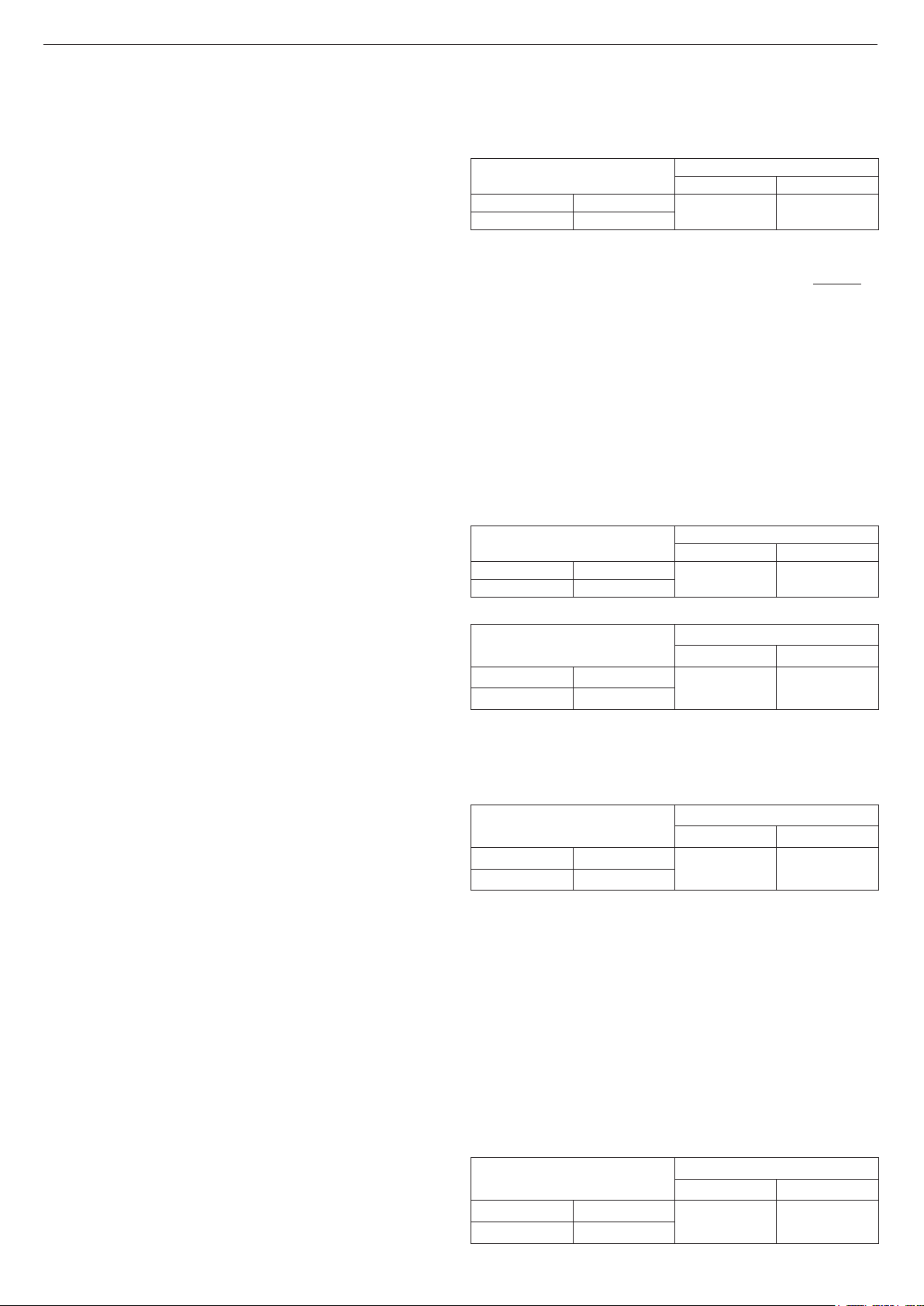
maximum length of the ue gas
discharge pipe ø 80 mm
pressure drop
45° bend 90° bend
25 C.S.I. 70 m
1 m 1,5 m
29 C.S.I. 65 m
“SEALED” INSTALLATION (TYPE C)
The boiler must be connected to concentric or twin ue gas discharge
pipes and air suction pipes, both leading outdoors. The boiler must not be
operated without them.
Concentric pipes (ø 60-100 mm) (g.21)
The concentric pipes can be placed in the most suitable direction according
to installation requirements, complying with the maximum lengths indicated
in the table.
b
Arrange the ue gas discharge pipe so it slopes by 3° towards the
boiler.
b
Non-insulated outlet pipes are potential sources of danger.
b
The boiler automatically adapts the purging to the type of installation
and the length of the pipe.
b
Do not obstruct or choke the combustion air suction pipe in any way.
For installation, follow the instructions supplied with the kit.
Horizontal
straight length
concentric pipe ø 60-100 mm
pressure drop
45° bend 90° bend
25 C.S.I. 5,85 m
1,3 m 1,6 m
29 C.S.I. 4,85 m
Vertical
straight length
concentric pipe ø 60-100 mm
pressure drop
45° bend 90° bend
25 C.S.I. 6,85 m
1,3 m 1,6 m
29 C.S.I. 5,85 m
Concentric pipes (ø 80-125 mm)
For this conguration, the special adaptor kit must be tted. The concentric
pipes can face in the direction most suitable for installation requirements.
For installation, follow the instructions supplied with the specic condensing
boilers kits.
straight length
concentric pipe ø 80-125 mm
pressure drop
45° bend 90° bend
25 C.S.I. 15,3 m
1,0 m 1,5 m
29 C.S.I. 12,8 m
Twin pipes (ø 80 mm) (g. 22)
The twin pipes can face in the direction most suited to the installation
requirements. For installation, follow the instructions supplied with the
specic accessory kit for condensing boilers.
To use the combustion air suction pipe, one of the two inlets (A and B) must
be selected. Remove the closure plug which is xed using screws, and use
the specic adaptor relating to the inlet selected (C air inlet adaptor ø 80 - D
air inlet adaptor from ø 60 to ø 80) available as an accessory.
b
Arrange the ue gas discharge pipe so it slopes by 3° towards the
boiler.
b
The boiler automatically adapts the purging to the type of installation
and the length of the pipes. Do not obstruct or choke the pipes in any
way.
b
Refer to the graphs to nd the maximum lengths of the single pipe.
b
The use of longer pipes reduces the boiler output.
maximum straight length
twin pipes ø 80 mm
pressure drop
45° bend 90° bend
25 C.S.I. 45 + 45 m
1,0 m 1,5 m
29 C.S.I. 40 + 40 m


Únase a la conversación sobre este producto
Aquí puedes compartir lo que piensas sobre Beretta Ciao Green 29 CSI Caldera de calefacción central. Si tiene alguna pregunta, primero lea atentamente el manual. Puede solicitar un manual utilizando nuestro formulario de contacto.