4
EXTENSION CORDS
Grounded tools require a three wire extension
cord. Double insulated tools can use either a two
or three wire extension cord. As the distance from
the supply outlet increases, you must use a heavier
gauge extension cord. Using extension cords with
inadequately sized wire causes a serious drop in
voltage, resulting in loss of power and possible tool
damage. Refer to the table shown to determine the
required minimum wire size.
The smaller the gauge number of the wire, the greater
the capacity of the cord. For example, a 14 gauge
cord can carry a higher current than a 16 gauge cord.
When using more than one extension cord to make
up the total length, be sure each cord contains at
least the minimum wire size required. If you are using
one extension cord for more than one tool, add the
nameplate amperes and use the sum to determine
the required minimum wire size.
Guidelines for Using Extension Cords
• If you are using an extension cord outdoors, be sure
it is marked with the sufx “W-A” (“W” in Canada) to
indicate that it is acceptable for outdoor use.
• Be sure your extension cord is properly wired and in
good electrical condition. Always replace a damaged
extension cord or have it repaired by a qualied
person before using it.
• Protect your extension cords from sharp objects,
excessive heat and damp or wet areas.
Recommended Minimum Wire Gauge
For Extension Cords*
Nameplate Amps
Extension Cord Length
25' 50' 75' 100' 150'
0 - 2.0
2.1 - 3.4
3.5 - 5.0
5.1 - 7.0
7.1 - 12.0
12.1 - 16.0
16.1 - 20.0
18
18
18
18
16
14
12
18
18
18
16
14
12
10
18
18
16
14
12
10
--
18
16
14
12
10
--
--
16
14
12
12
--
--
--
* Based on limiting the line voltage drop to ve volts at 150%
of the rated amperes.
GROUNDING
Improperly connecting the ground-
ing wire can result in the risk of
electric shock. Check with a qualied electrician
if you are in doubt as to whether the outlet is
properly grounded. Do not modify the plug pro-
vided with the tool. Never remove the grounding
prong from the plug. Do not use the tool if the
cord or plug is damaged. If damaged, have it
repaired by a MILWAUKEE service facility before
use. If the plug will not t the outlet, have a
proper outlet installed by a qualied electrician.
Grounded Tools (Three-Prong Plugs)
Tools marked “Grounding Required” have a three
wire cord and three prong grounding plug. The plug
must be connected to a properly grounded outlet
(See Figure A). If the tool should electrically mal-
function or break down, grounding provides a low
resistance path to carry electricity away from the
user, reducing the risk of electric shock.
The grounding prong in the plug is connected through
the green wire inside the cord to the grounding
system in the tool. The green wire in the cord must
be the only wire connected to the tool's grounding
system and must never be attached to an electrically
“live” terminal.
• Do not position your hand in line with and behind
the rotating wheel. When the wheel, at the point of
operation, is moving away from your hand, the possible
kickback may propel the spinning wheel and the power
tool directly at you.
• When wheel is binding or when interrupting a cut for
any reason, switch off the power tool and hold the
power tool motionless until the wheel comes to a
complete stop. Never attempt to remove the cut-off
wheel from the cut while the wheel is in motion oth-
erwise kickback may occur. Investigate and take cor-
rective action to eliminate the cause of wheel binding.
• Do not restart the cutting operation in the work-
piece. Let the wheel reach full speed and carefully
reenter the cut. The wheel may bind, walk up or
kickback if the power tool is restarted in the workpiece.
• Support panels or any oversized workpiece to
minimize the risk of wheel pinching and kickback.
Large workpieces tend to sag under their own weight.
Supports must be placed under the workpiece near
the line of cut and near the edge of the workpiece on
both sides of the wheel.
• Use extra caution when making a “pocket cut” into
existing walls or other blind areas. The protruding
wheel may cut gas or water pipes, electrical wiring or
objects that can cause kickback.
Safety
Warnings Specic for Wire Brushing Operations:
• Be aw
are that wire bristles are thrown by the brush
even during ordinary operation. Do not overstress the
wires by applying excessive load to the brush. The
wire bristles can easily penetrate light clothing and/or skin.
• Allow brushes to run at operating speed for at least
one minute before using them. During this time no
one is to stand in front or in line with the brush. Loose
bristles or wires will be discharged during the run-in time.
• Direct the discharge of the spinning wire brush
away from you. Small particles and tiny wire fragments
may be discharged at high velocity during the use of
these brushes and may become imbedded in your skin.
Additional Safety Warnings
• Maintain labels and nameplates. These carry im-
portant information. If unreadable or missing, contact
a MILWAUKEE service facility for a free replacement.
•
Some dust created by power sanding,
sawing, grinding, drilling, and other
construction activities contains chemicals known to
cause cancer, birth defects or other reproductive harm.
Some examples of these chemicals are:
• lead from lead-based paint
• crystalline silica from bricks and cement and other
masonry products, and
• arsenic and chromium from chemically-treated lumber.
Your risk from these exposures varies, depending on
how often you do this type of work. To reduce your
exposure to these chemicals: work in a well ventilated
area, and work with approved safety equipment, such
as those dust masks that are specially designed to
lter out microscopic particles.
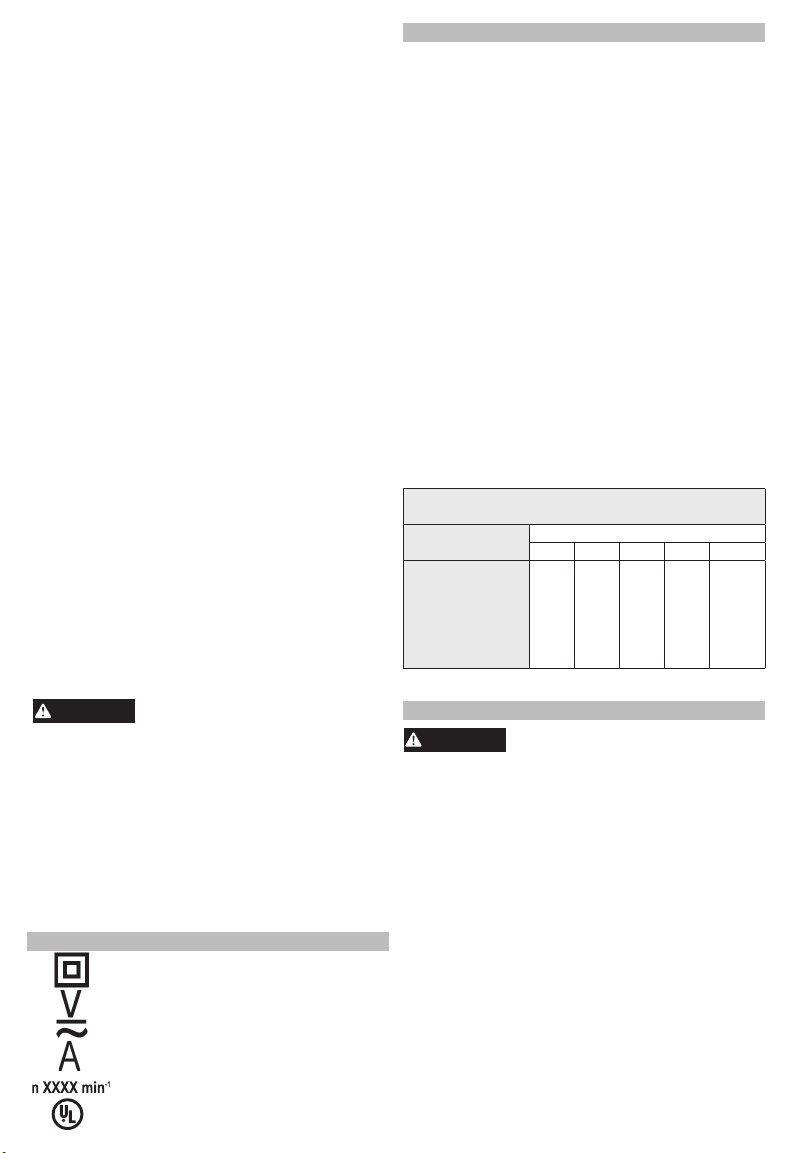
SYMBOLOGY
Double Insulated
Volts
Alternating/Direct Current
Amps
Rated Revolutions per Minute (RPM)
UL Listing Mark for Canada and U.S.





Únase a la conversación sobre este producto
Aquí puedes compartir lo que piensas sobre Milwaukee 5196 Amoladora recta. Si tiene alguna pregunta, primero lea atentamente el manual. Puede solicitar un manual utilizando nuestro formulario de contacto.