Manual de uso Sharp GX-BT60 Altavoz

¿Necesita un manual para su Sharp GX-BT60 Altavoz? A continuación puedes ver y descargar el manual en PDF gratis en español. Este producto actualmente tiene 5 preguntas frecuentes, 0 comentarios y tiene 1 voto con una calificación promedio de producto de 100/100. Si este no es el manual que desea, , contáctenos.

¿Su producto tiene algún defecto y el manual no ofrece ninguna solución? Vaya a Repair Café para solicitar un servicio de reparación gratuito.

Manual de uso

Loading…

If you receive an incoming call at an inconvenient time, let your voice mail answer it
for you.
Let the person you are speaking to know you are driving; if necessary, suspend the
call in heavy traffi c or hazardous weather conditions. Rain, sleet, snow, ice, and heavy
traffi c can be hazardous.
Do not take notes or look up phone numbers while driving. Remember that your
primary responsibility is driving safely.
Do not engage in stressful or emotional conversations that may be distracting.
Make people you are talking to aware you are driving and suspend conversations that
can divert your attention away from the road.
In the case of  re, traffi c accidents, medical or other serious emergencies, dial the local
emergency number.
Call roadside assistance or a special non-emergency wireless assistance number when
necessary.
Care and Handling
Your SHARP Bluetooth device is a precision engineered instrument. To ensure its
ongoing performance, you should look after it as you would any quality consumer
electronic product, and use it in accordance with the instructions.
SHARP recommends that you take the following precautions.
Avoid leaving your device in direct sunlight, such as on the dashboard or console of a
car or truck. Do not leave your device unattended in your vehicle.
Do not leave your device, or use your device, in any area where the temperature may
exceed 60 degrees Centigrade (140 degrees Fahrenheit), such as inside a closed car
on a hot day.
Remember that on a hot day the temperature inside a closed car may be signi cantly
higher than the outside air temperature.
Do not leave your device, or use your device, in any area where the temperature is
likely to drop below 0 degrees Centigrade (32 degrees Fahrenheit).
Do not use any household or industrial grade detergents or cleaners to clean your
device. If your device becomes dirty or smeared, in most instances a wipe with a dry or
slightly damp cloth should be suffi cient to clean it.
Do not leave your Bluetooth device connected to a power supply for long periods
after it is fully charged. SHARP does not recommend long periods of continued
charging.
Before charging your SHARP device, make sure that the cable is not damaged. If you
notice any abnormalities, seek advice from a quali ed professional.
If traveling internationally, ensure that your SHARP wall or car power adapter is
approved for use in the country where you plan to use it and hat the adapter voltage is
suited to the local power supply.
EN
Should a fault develop with your SHARP product, contact SHARP for advice on how
to proceed.
Do not attempt to repair or alter any SHARP product yourself.
Approved Accessories
The use of accessories not approved by SHARP, may cause your SHARP device to
malfunction or in the case of non-approved electrical accessories may cause the device
to exceed RF energy exposure guidelines.
Use of non approved accessories will void your devices warranty.
Electromagnetic Interference
Nearly every electronic device is susceptible to electromagnetic interference (EMI) if
inadequately shielded, electromagnetic con gured for electromagnetic compatibility.
Similar to a mobile phone, your SHARP device is a low power transmitter / receiver and
is covered by regulations pertaining to such devices. Turn off your SHARP device in any
facility where posted notices instruct you to do so. These facilities may include hospitals
or health care facilities that may be using equipment that is sensitive to external RF
energy.
When instructed to do so, turn off your SHARP device when on board an aircraft. Any
use of a mobile device must be in accordance with applicable laws, regulations and
airline crew instructions.
Some Bluetooth devices may interfere with some hearing aids. In the event of such
interference, you may want to consult your hearing aid manufacturer or physician to
discuss alternatives.
If you use any other personal medical device, consult the manufacturer of your device
to determine if it is adequately shielded from RF energy. Your doctor or physician may
be able to assist you in obtaining this information.
If you are in doubt about whether your SHARP device be safely turned on or
used, please consult an authorised person in the location you want to use your
SHARP device. If no authorised person is available or you remain uncertain, SHARP
recommends that you turn off your Bluetooth device and any mobile phones unless
they are required in an emergency situation.
How to remove the battery for disposal
RISK OF INJURY. WEAR GLOVES WHEN WORKING!
The battery should be removed by an authorized Sharp service centre. Not doing
so will invalidate any guarantees and warranties on your device.
1. Use a  at screwdriver to gently prize away the fabric cover.
2. Remove the 5 screws with Philips screwdriver on middle plastic cover.
3. Take off the middle plastic part.
2
Descargue el manual en Español (PDF, 0.71 MB)
(Piense en el medioambiente y solo imprima este manual si es de verdad necesario)

Loading…

Puntuación

Dé su opinión de la Sharp GX-BT60 Altavoz calificando el producto. ¿Quiere compartir su experiencia con este producto o hacer una pregunta? Deje un comentario en la parte inferior de la página.
¿Estás satisfecho con elSharp GX-BT60 Altavoz?
No
100%
0%
1 voto

Únase a la conversación sobre este producto

Aquí puedes compartir lo que piensas sobre Sharp GX-BT60 Altavoz. Si tiene alguna pregunta, primero lea atentamente el manual. Puede solicitar un manual utilizando nuestro formulario de contacto.

Más sobre este manual

Entendemos que es bueno tener un manual en papel para tus Sharp GX-BT60 Altavoz. Siempre puedes descargar el manual desde nuestro sitio web e imprimirlo tú mismo. Si deseas tener un manual original te recomendamos contactar con Sharp. Es posible que puedan proporcionar un manual original. ¿Estás buscando el manual de tu Sharp GX-BT60 Altavoz en otro idioma? Elija su idioma preferido en nuestra página de inicio y busque el número de modelo para ver si lo tenemos disponible.

Especificaciones

Marca Sharp
Modelo GX-BT60
Categoría Altavoces
Tipo de archivo PDF
Tamaño del archivo 0.71 MB

Todos los manuales para Sharp Altavoces
Más manuales de Altavoces

Preguntas frecuentes sobre Sharp GX-BT60 Altavoz

Nuestro equipo de atención al cliente busca información útil sobre los productos y responde a las preguntas frecuentes. Si encuentra inexactitudes en las preguntas frecuentes, indíquenoslo usando nuestro formulario de contacto.

Quiero conectar un altavoz a mi televisor con HDMI. ¿Qué puerto debo usar? Verificado

Debe usar el puerto HDMI-ARC, que está hecho específicamente para conectar equipos de audio.

Ha sido de gran ayuda (1488) Leer más

¿Qué indican las frecuencias sobre mi altavoz? Verificado

Indican el rango de frecuencias que el altavoz puede producir. Una gama más amplia de frecuencias proporcionará una mayor variación en el sonido y producirá un sonido de mayor calidad.

Ha sido de gran ayuda (795) Leer más

¿Cuándo está la música demasiado alta? Verificado

El sonido por encima de los 80 decibelios (dB) puede causar daños en la audición. Los sonidos por encima de 120 dB dañan la audición de forma inmediata. La gravedad de los daños depende de la frecuencia y la duración del sonido.

Ha sido de gran ayuda (477) Leer más

¿El bluetooth funciona a través de paredes y techos? Verificado

Una señal bluetooth funcionará a través de paredes y techo, a menos que estén hechos de metal. Dependiendo del grosor y del material de la pared, la señal puede perder fuerza.

Ha sido de gran ayuda (238) Leer más

¿Hasta qué nivel es seguro el ruido para los niños? Verificado

Los niños se dañan los oídos antes que los adultos. Por lo tanto, nunca exponga a los niños a un ruido superior a 85 dB. En el caso de los auriculares hay modelos especiales para niños. Con altavoces u en otras situaciones hay que estar atento para que el ruido no supere ese nivel.

Ha sido de gran ayuda (212) Leer más
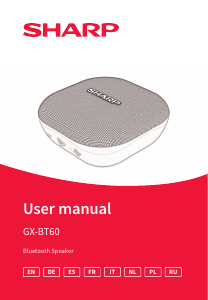
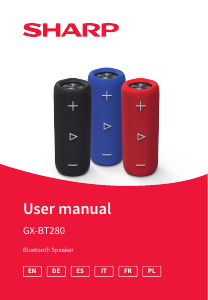
Manual de uso Sharp GX-BT60 Altavoz

Productos relacionados

Categorias relacionadas

×
Download