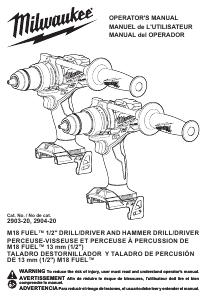
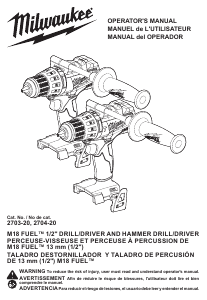
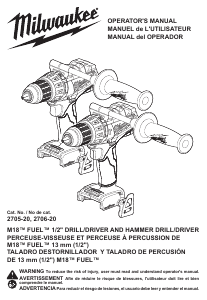
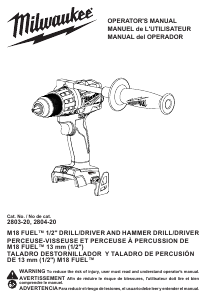
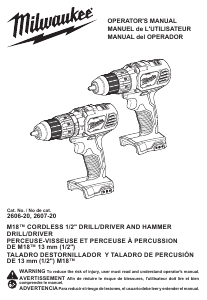
Manual de uso Milwaukee 2701-20 Atornillador taladrador

¿Necesita un manual para su Milwaukee 2701-20 Atornillador taladrador? A continuación puedes ver y descargar el manual en PDF gratis en español. Este producto actualmente tiene 3 preguntas frecuentes, 0 comentarios y tiene 0 votos. Si este no es el manual que desea, , contáctenos.

¿Su producto tiene algún defecto y el manual no ofrece ninguna solución? Vaya a Repair Café para solicitar un servicio de reparación gratuito.

Manual de uso

Loading…

6
WARNING
To reduce the risk of injury, always
hold or brace securely.
Starting, Stopping and Controlling Speed
1. To start the tool, grasp the handle(s) rmly and
pull the trigger.
NOTE: An LED is turned on when the trigger is
pulled and will go o󰀨 shortly after the trigger is
released.
2. To vary the speed, increase or decrease the pres-
sure on the trigger. The further the trigger is pulled,
the greater the speed.
3. To stop the tool, release the trigger. Make sure
the bit comes to a complete stop before laying the
tool down.
Drilling
Place the bit on the work surface and apply rm pres-
sure before starting. Too much pressure will slow the
bit and reduce drilling e󰀩ciency. Too little pressure
will cause the bit to slide over the work area and dull
the point of the bit.
If the tool begins to stall, reduce pressure slightly to
allow the bit to regain speed. If the bit binds, reverse
the motor to free the bit from the workpiece.
APPLICATIONS
WARNING
To reduce the risk of electric shock,
check work area for hidden pipes
and wires before drilling or driving screws.
Drilling in Wood, Composition Materials and
Plastic
When drilling in wood, composition materials and
plastic, select the drill-only operating mode.
Start the drill slowly, gradually increasing speed as
you drill. When drilling into wood, use wood augers
or twist drill bits. Always use sharp bits. When using
twist drill bits, pull the bit out of the hole frequently to
clear chips from the bit utes. To reduce the chance of
splintering, back work with a piece of scrap wood. Se-
lect low speeds for plastics with a low melting point.
Drilling in Metal
When drilling in metal, select the drill-only oper-
ating mode. Use high speed steel twist drills or hole
saws. Use a center punch to start the hole. Lubricate
drill bits with cutting oil when drilling in iron or steel.
Use a coolant when drilling in nonferrous metals such
as copper, brass or aluminum. Back the material
to prevent binding and distortion on breakthrough.
Drilling in Masonry
When drilling in masonry, select the hammer drill
operating mode. Use high speed carbide-tipped bits.
Drilling soft masonry materials such as cinder block
requires little pressure. Hard materials like concrete
require more pressure. A smooth, even ow of dust
indicates the proper drilling rate. Do not let the bit
spin in the hole without cutting. Do not use water to
settle dust or to cool bit. Both actions will damage
the carbide.
Driving Screws and Nut Running
Drill a pilot hole when driving screws into thick or hard
materials. Select the
driving screws mode. Set
the torque selector collar to the proper position and
set the speed to low. Use the proper style and size
screwdriver bit for the type of screw you are using.
With the screwdriver bit in the screw, place the tip of
the screw on the workpiece and apply rm pressure
before pulling the trigger. Screws can be removed
by reversing the motor.
Overloading
Continuous overloading may cause permanent dam-
age to tool or battery pack.
MAINTENANCE
WARNING
To reduce the risk of injury, always
unplug the charger and remove the
battery pack from the charger or tool before
performing any maintenance. Never disassemble
the tool, battery pack or charger. Contact a
MILWAUKEE service facility for ALL repairs.
Maintaining Tool
Keep your tool, battery pack and charger in good
repair by adopting a regular maintenance program.
Inspect your tool for issues such as undue noise,
misalignment or binding of moving parts, breakage of
parts, or any other condition that may a󰀨ect the tool
operation. Return the tool, battery pack, and charger
to a MILWAUKEE service facility for repair. After six
months to one year, depending on use, return the
tool, battery pack and charger to a MILWAUKEE
service facility for inspection.
If the tool does not start or operate at full power with
a fully charged battery pack, clean the contacts on
the battery pack. If the tool still does not work prop-
erly, return the tool, charger and battery pack, to a
MILWAUKEE service facility for repairs.
WARNING
To reduce the risk of personal in-
jury and damage, never immerse
your tool, battery pack or charger in liquid or
allow a liquid to ow inside them.
Cleaning
Clean dust and debris from vents. Keep handles
clean, dry and free of oil or grease. Use only mild
soap and a damp cloth to clean, since certain clean-
ing agents and solvents are harmful to plastics and
other insulated parts. Some of these include gasoline,
turpentine, lacquer thinner, paint thinner, chlorinated
cleaning solvents, ammonia and household deter-
gents containing ammonia. Never use ammable or
combustible solvents around tools.
Repairs
For repairs, return the tool, battery pack and charger
to the nearest authorized service center.
ACCESSORIES
WARNING
Use only recommended accesso-
ries. Others may be hazardous.
For a complete listing of accessories, go online to
www.milwaukeetool.com or contact a distributor.
SERVICE - UNITED STATES
1-800-SAWDUST (1.800.729.3878)
Monday-Friday, 7:00 AM - 6:30 PM CST
or visit www.milwaukeetool.com
Contact Corporate After Sales Service Technical
Support with technical, service/repair, or warranty
questions.
Become a Heavy Duty Club Member at
www.milwaukeetool.com to receive important
notications regarding your tool purchases.
Descargue el manual en Español (PDF, 5.15 MB)
(Piense en el medioambiente y solo imprima este manual si es de verdad necesario)

Loading…

Puntuación

Dé su opinión de la Milwaukee 2701-20 Atornillador taladrador calificando el producto. ¿Quiere compartir su experiencia con este producto o hacer una pregunta? Deje un comentario en la parte inferior de la página.
¿Estás satisfecho con elMilwaukee 2701-20 Atornillador taladrador?
No
Sea el primero en calificar este producto
0 votos

Únase a la conversación sobre este producto

Aquí puedes compartir lo que piensas sobre Milwaukee 2701-20 Atornillador taladrador. Si tiene alguna pregunta, primero lea atentamente el manual. Puede solicitar un manual utilizando nuestro formulario de contacto.

Más sobre este manual

Entendemos que es bueno tener un manual en papel para tus Milwaukee 2701-20 Atornillador taladrador. Siempre puedes descargar el manual desde nuestro sitio web e imprimirlo tú mismo. Si deseas tener un manual original te recomendamos contactar con Milwaukee. Es posible que puedan proporcionar un manual original. ¿Estás buscando el manual de tu Milwaukee 2701-20 Atornillador taladrador en otro idioma? Elija su idioma preferido en nuestra página de inicio y busque el número de modelo para ver si lo tenemos disponible.

Especificaciones

Marca Milwaukee
Modelo 2701-20
Categoría Atornilladores taladrador
Tipo de archivo PDF
Tamaño del archivo 5.15 MB

Todos los manuales para Milwaukee Atornilladores taladrador
Más manuales de Atornilladores taladrador

Preguntas frecuentes sobre Milwaukee 2701-20 Atornillador taladrador

Nuestro equipo de atención al cliente busca información útil sobre los productos y responde a las preguntas frecuentes. Si encuentra inexactitudes en las preguntas frecuentes, indíquenoslo usando nuestro formulario de contacto.

Sigo quitando la cabeza del tornillo cuando uso el destornillador. ¿Porqué es eso? Verificado

La mayoría de los destornilladores pueden configurarse para atornillar más fuerte o más suave. Si la cabeza sigue siendo despojada, el taladro-destornillador probablemente debería colocarse en una configuración diferente. Cuando se trata de un dispositivo inalámbrico, asegúrese siempre de que la batería esté cargada para obtener un resultado óptimo.

Ha sido de gran ayuda (96) Leer más

¿Necesito usar protección auditiva cuando utilizo un taladro? Verificado

Si deberías. Aunque la cantidad de ruido producido por un taladro puede variar entre marcas y modelos, la exposición prolongada a ruidos fuertes puede causar daños auditivos permanentes. Por eso es una buena idea usar protección auditiva.

Ha sido de gran ayuda (37) Leer más

¿Puedo guardar herramientas eléctricas en un cobertizo o garaje? Verificado

En general, las herramientas eléctricas se pueden guardar en un cobertizo o en un garaje, aunque a veces haga frío allí. Sin embargo, para prolongar la vida útil de la herramienta eléctrica, es mejor guardarla en un lugar seco y sin grandes fluctuaciones de temperatura. En un cobertizo o garaje, las diferencias de temperatura pueden provocar la formación de condensación, lo que puede provocar oxidación. Además, las herramientas que funcionan con baterías duran menos y no se cargan tan bien a temperaturas muy bajas. Para estar seguro de cómo debe almacenarse su herramienta eléctrica, lea siempre detenidamente el manual del usuario.

Ha sido de gran ayuda (29) Leer más
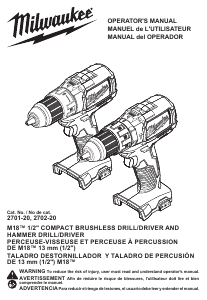
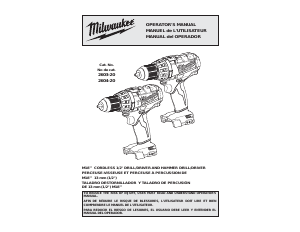
Manual de uso Milwaukee 2701-20 Atornillador taladrador

Productos relacionados

Categorias relacionadas

×
Download